
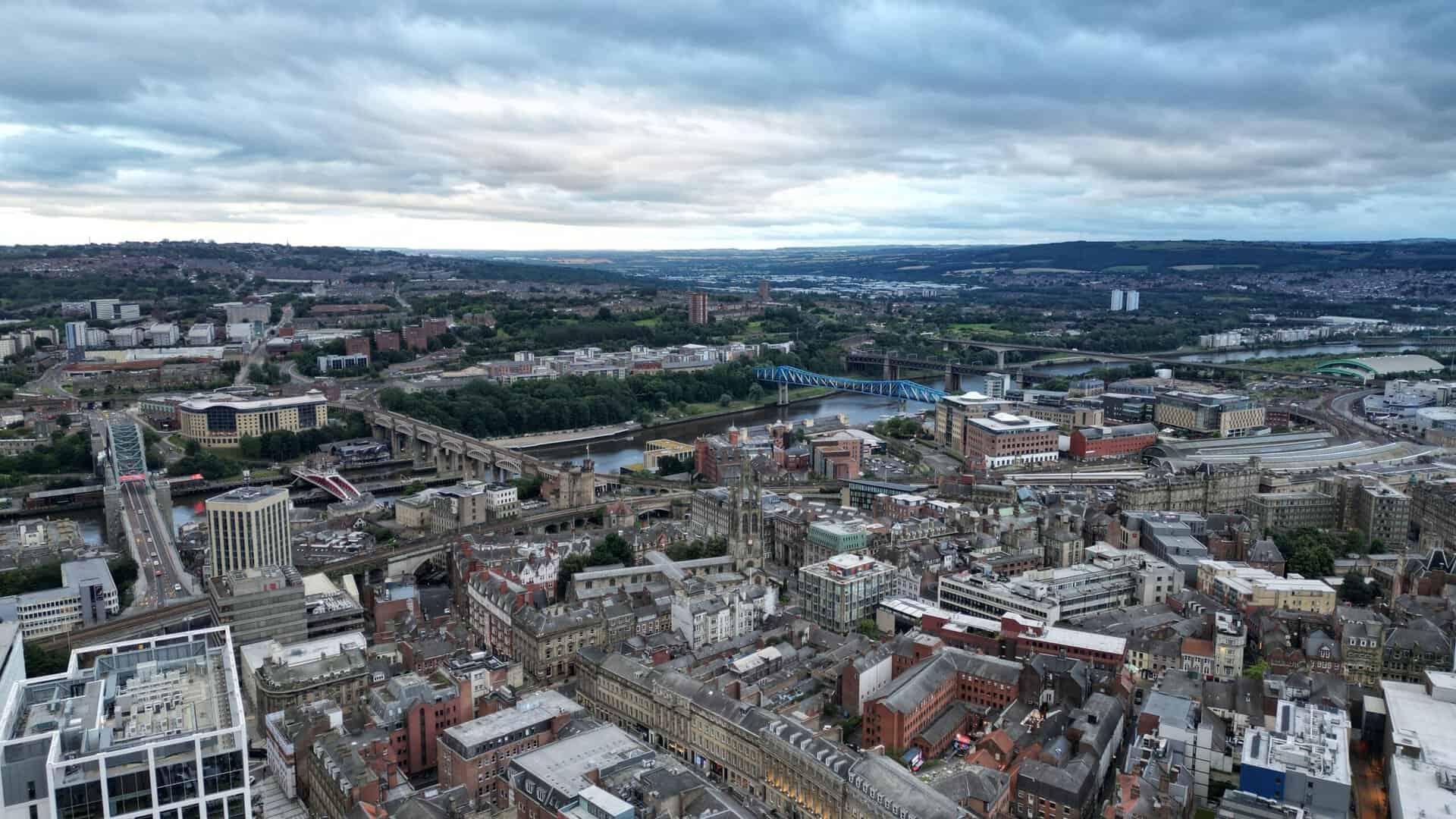
Drone Roof Inspections in Newcastle
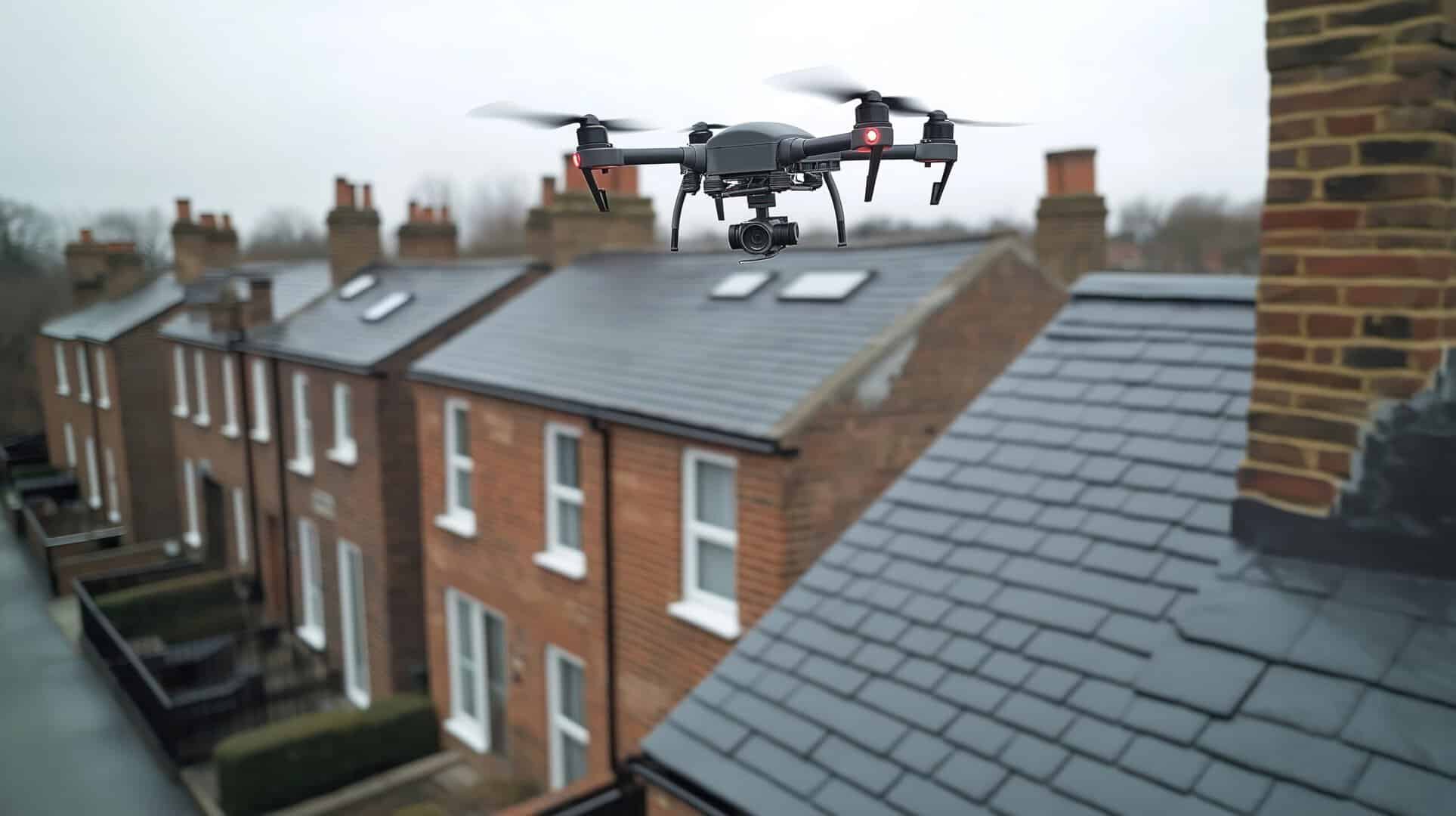
Bottomley Drone Solutions provides drone roof inspections in Newcastle, capturing close aerial views of roofs that are difficult to examine from the ground. We help homeowners, managing agents and businesses review visible roof coverings, chimney details, junctions and drainage features before arranging maintenance or further investigation. From older city properties to larger commercial premises, each inspection is planned around the building, nearby activity and the images required. We can also discuss checks for visible damage following storms, once conditions are suitable.
Get A Free Quote
Benefits of Drone Roof Inspections
Getting a useful view of a roof does not always need to begin with scaffolding or a climb onto the covering. Drone roof inspections in Newcastle can provide photographs of suitable elevated areas while keeping the initial visual assessment at a distance. This can be helpful where adjoining properties, building height or limited space make conventional access more involved.
Improved Operator Safety
Eliminates the need for operatives to work at height, in confined spaces or in hazardous environments during structural inspections
Detailed Visual Data
High-resolution imagery and video capture defects, damage and deterioration that may be missed during traditional visual inspections
Faster Inspection Times
Structures and assets inspected quickly and efficiently, reducing downtime and minimising disruption to ongoing operations
Reduced Access Costs
No need for scaffolding, cherry pickers or rope access, significantly reducing the cost and complexity of inspection operations
Professional Inspection Reports
Detailed reports with annotated imagery and clear findings delivered in a format that is easy to use for maintenance and planning purposes
Fully Compliant Operations
All inspection flights are carried out under full CAA authorisation by experienced and insured operators with a strong focus on safety
Detailed Roof Inspections Without Difficult Initial Access
Reaching a roof can involve more planning than expected, especially above shops, neighbouring gardens or buildings with several changes in height. An initial drone inspection can help establish what is visible before specialist access is arranged. Our drone roof inspections in Newcastle provide aerial views of suitable roof surfaces and details, helping owners and contractors identify areas that warrant closer attention without assuming the whole roof needs to be accessed straight away.
We can photograph features such as valleys, roof edges, parapets and chimney flashings, depending on the viewing angles and operating conditions. The resulting images may help clarify the location of a damaged covering or show how different sections of a roof meet. They cannot establish the condition of every hidden layer or replace a physical examination where one is needed. As part of our wider professional drone services, we discuss the purpose of the inspection and the intended imagery before confirming a suitable approach.
A Closer Look at Newcastle’s Older and Historic Roofs
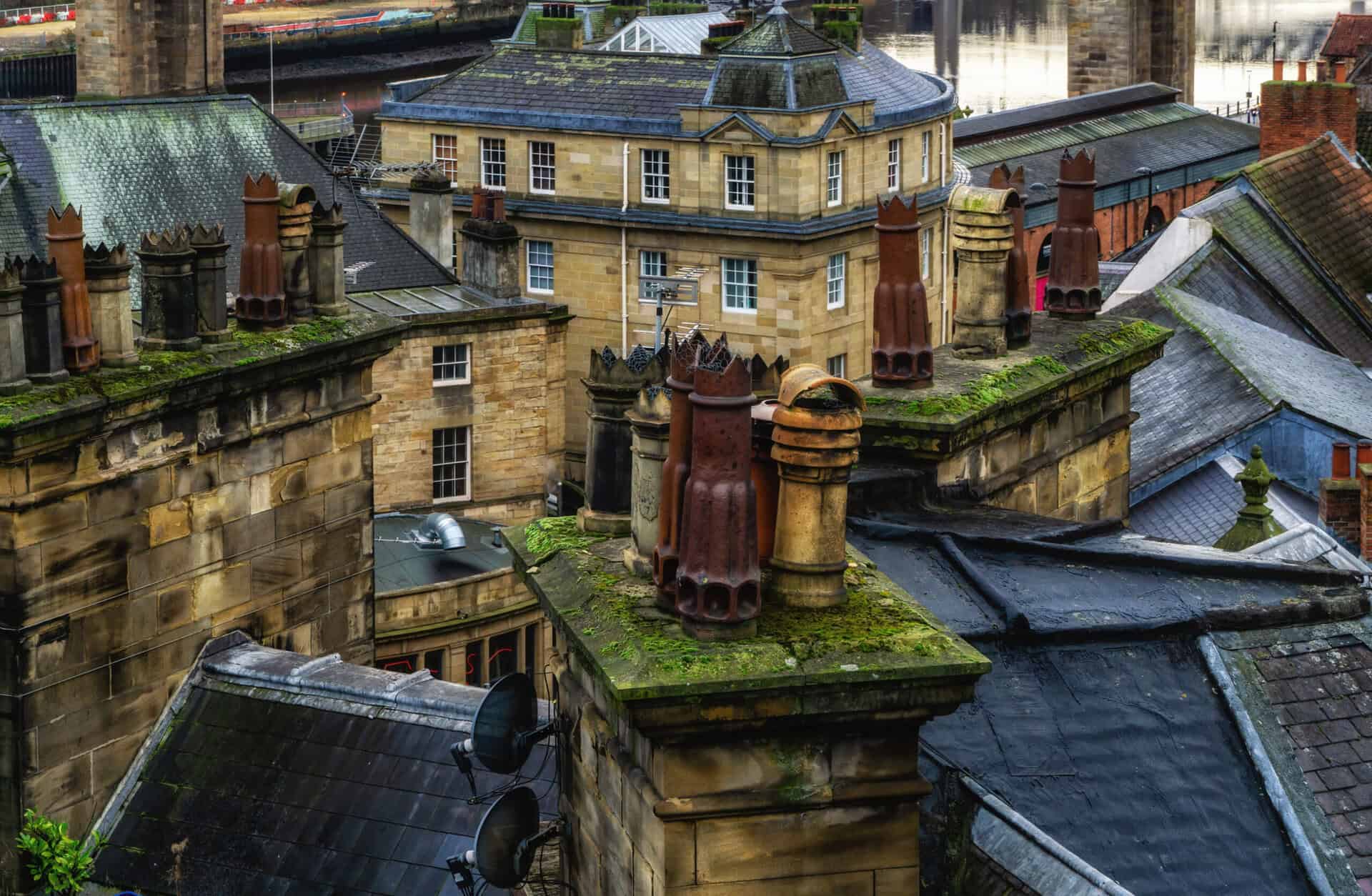
Newcastle’s historic streets include buildings with tall frontages, chimney stacks, slate roofs and roof sections that are hidden behind parapets. The city centre and established residential areas also contain properties adapted over time, where extensions or changes of use can make the roof arrangement less straightforward. Aerial photography can help owners see suitable external details that are difficult to review from nearby public space.
For an older building, the aim may be to record a particular chimney, check a roof junction or obtain an overview before asking a specialist to inspect more closely. Images can highlight visible movement in coverings, damaged ridge details or debris around outlets. They should be considered alongside the building’s history and any evidence inside, rather than treated as a complete assessment of its condition.
Newcastle City Council publishes guidance about the city’s conservation areas, including its historic central area. We consider the setting and practical flight arrangements for each enquiry. Where repairs involve historic fabric, a suitably experienced professional can advise on the next steps; drone photographs do not replace conservation advice or confirm what permissions may be needed.
Assessing Visible Roof Problems After Severe Weather
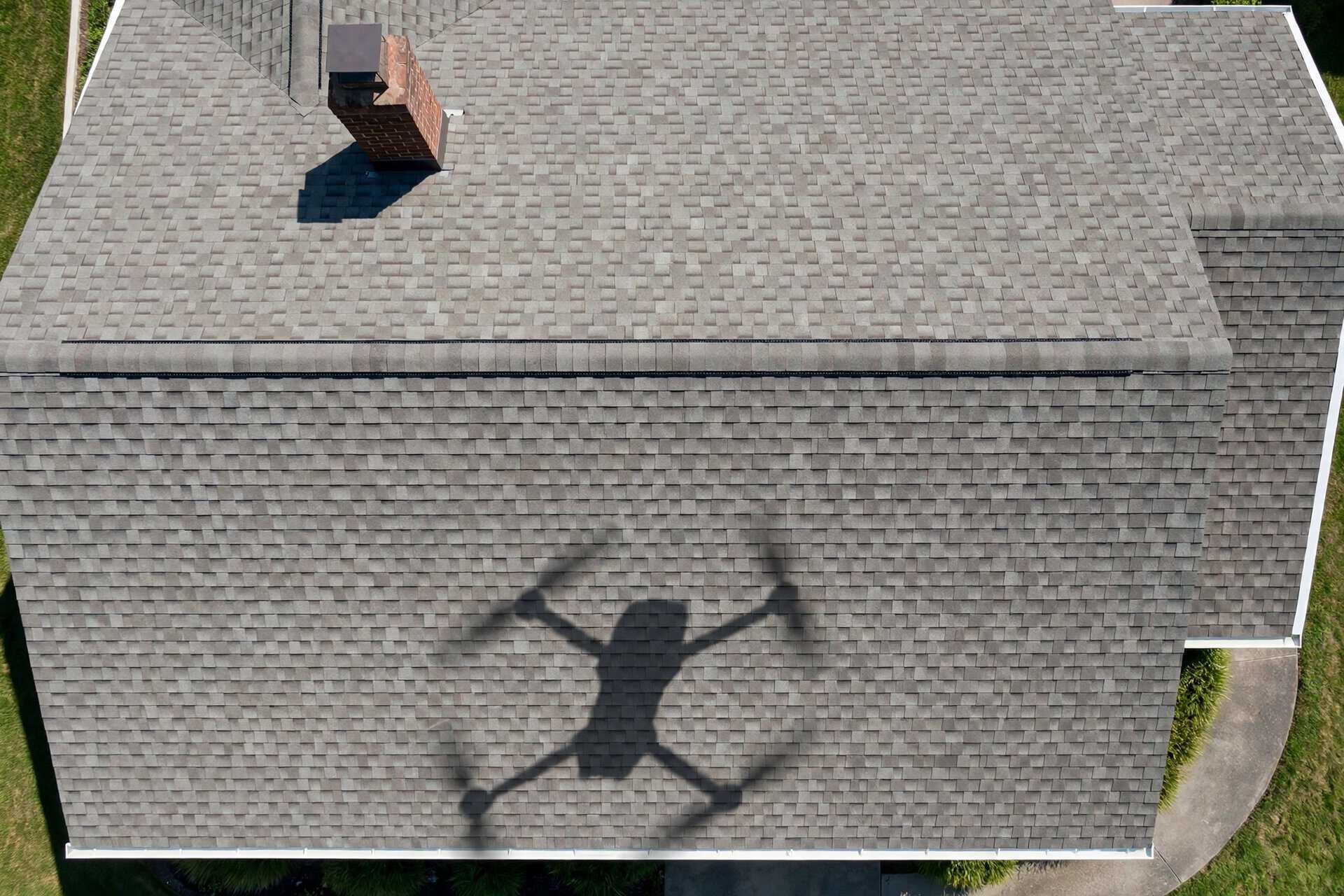
After a spell of strong winds or prolonged rain, a roof may need attention even when the full extent of a problem is not visible from below. Missing slates, disturbed ridge tiles or damage around a gutter can provide warning signs, while an indoor damp patch may prompt questions about a roof junction higher up. A drone inspection can help document visible external conditions before the owner decides what further assessment or repairs to arrange.
For Newcastle properties, we plan the proposed flight around the roof and surrounding activity, and inspect only when weather conditions allow. The photographs can provide a useful record for discussions with a roofing contractor, but they cannot prove where water has travelled beneath the covering or rule out concealed damage. Our broader drone inspection services also support other building and asset enquiries. If loose materials or an unstable feature pose an immediate risk, seek appropriate urgent help and keep clear of the affected area before arranging a routine aerial inspection.
Practical Inspection Support From Bottomley Drone Solutions
We approach each roof inspection by asking what information would help you make the next decision. That might mean recording an awkward roof slope, checking a suspected defect or obtaining photographs for a contractor. Read about our drone business and the approach behind our services.
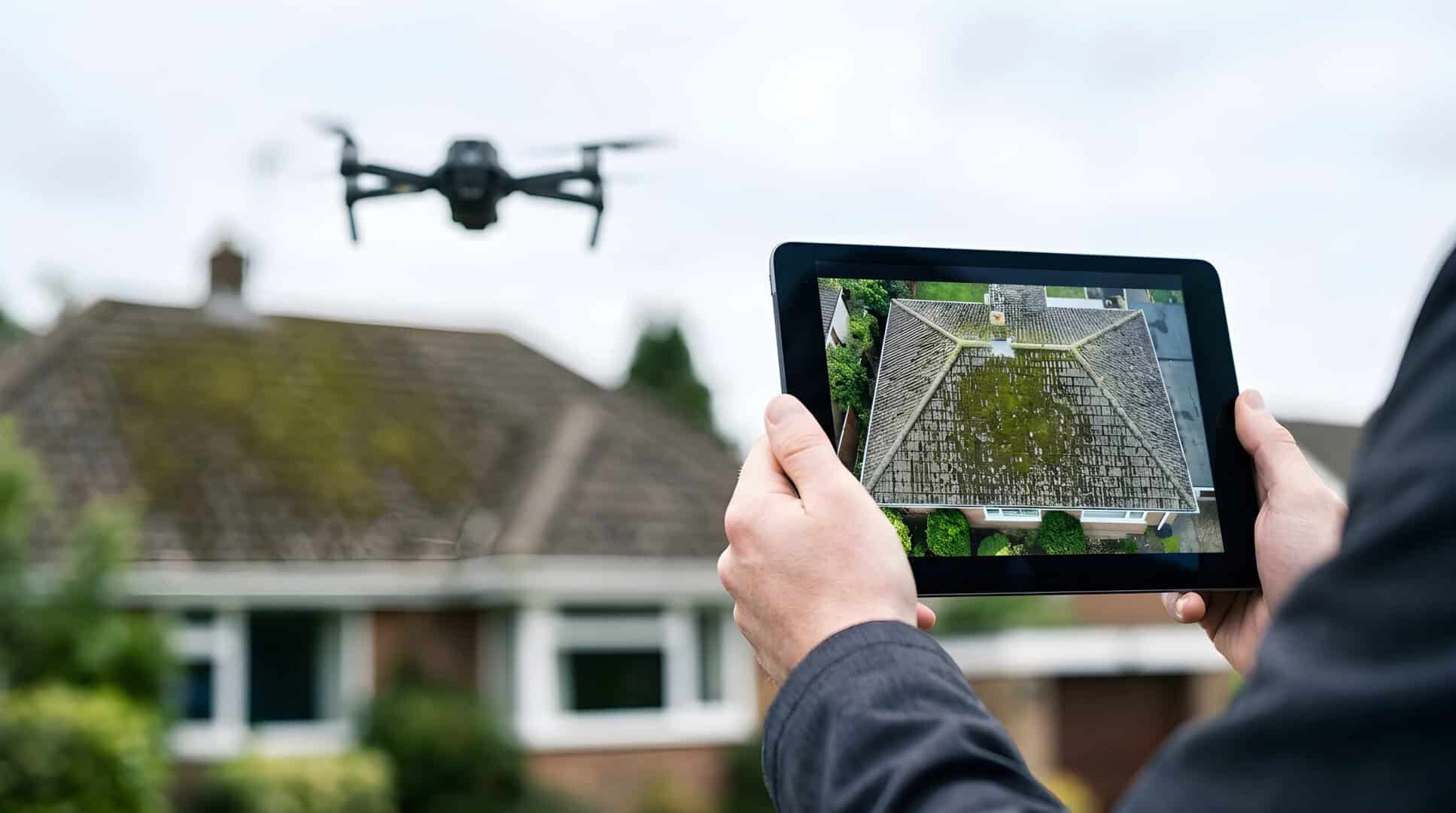
Bottomley Drone Solutions discusses the scope, access considerations and intended imagery before confirming arrangements. We explain the limits of a visual inspection so you can plan any follow-up appropriately. For straightforward advice about suitability and a free, no-obligation quotation, contact our team with your property details.
Discuss Your Survey Project With Us
Trusted Aerial Solutions
Professional Drone Services You Can Rely On
- ✓ Drone Topographic Surveys and Land Mapping
- ✓ Drone LiDAR and 3D Scanning
- ✓ Drone Inspections
- ✓ Drone Photography and Videography
- ✓ Experienced, Compliant and Safety-Focused Team

Arrange a Drone Roof Inspection in Newcastle
If you need a clearer view of your roof, tell Bottomley Drone Solutions about the property and the reason for your enquiry. We provide drone roof inspections in Newcastle for residential and commercial requirements, considering each building and its surroundings individually. A small roof with one suspected fault may call for a different approach from a larger property with several roof levels, hidden gutters or multiple chimney stacks.
Send the address, a brief description of the concern and any relevant photographs taken safely from an accessible position. Whether you are reviewing an older building, planning maintenance or checking possible damage after a storm, we can discuss the areas to be photographed and the practical arrangements. Request your free, no-obligation quotation and find out whether an aerial visual inspection is suitable before committing to the next stage of roof investigation.
Frequently Asked Questions
Wondering whether a drone roof inspection is right for your Newcastle property? These answers cover access equipment, older roofs, busy surroundings and checks after severe weather, helping you understand what to discuss before arranging an inspection.
In suitable circumstances, a drone can photograph external roof areas without scaffolding being erected for that initial visual check. This can be useful where the first task is to identify a visible concern or understand which areas need closer investigation. However, it does not mean access equipment will never be required. A roofer may still need scaffolding or another suitable access method to examine materials directly or carry out repairs. We assess whether the roof and its surroundings allow useful images to be captured before confirming the proposed inspection.
Photographs can help record the layout and visible condition of an older roof before a maintenance or repair discussion. They may show displaced coverings, chimney details, roof junctions or drainage features that are difficult to see from below. For Newcastle properties in historic settings, images can be shared with a suitably experienced roofer or conservation professional to help explain the concern. They cannot determine the condition of hidden timbers or fixings, or establish whether proposed work needs consent. Newcastle City Council’s conservation guidance provides a starting point for questions about protected areas.
A busy street does not automatically make an inspection possible or impossible. We need to consider the location of people, traffic, neighbouring buildings and suitable space for take-off and landing, as well as any relevant restrictions. These factors affect the viewing angles available and whether a safe operating arrangement can be established. Some roof areas may be obscured or unsuitable to photograph from the proposed position. Share the address and the features you want checked so we can discuss the practical options rather than assume every city-centre roof can be inspected.
Make a note of what changed and when, such as new damp marks, debris found outside or a gutter that has started overflowing. If it is safe, photographs taken from ground level can help explain the issue. Do not climb onto the roof or stand beneath loose materials to obtain pictures. Where there is an immediate risk, arrange appropriate urgent assistance first. For a routine aerial inspection, send the property address and details of the concern. We can then discuss the scope and arrange a flight when weather and site conditions are suitable.